
The Hazardous Advert Investigation Team
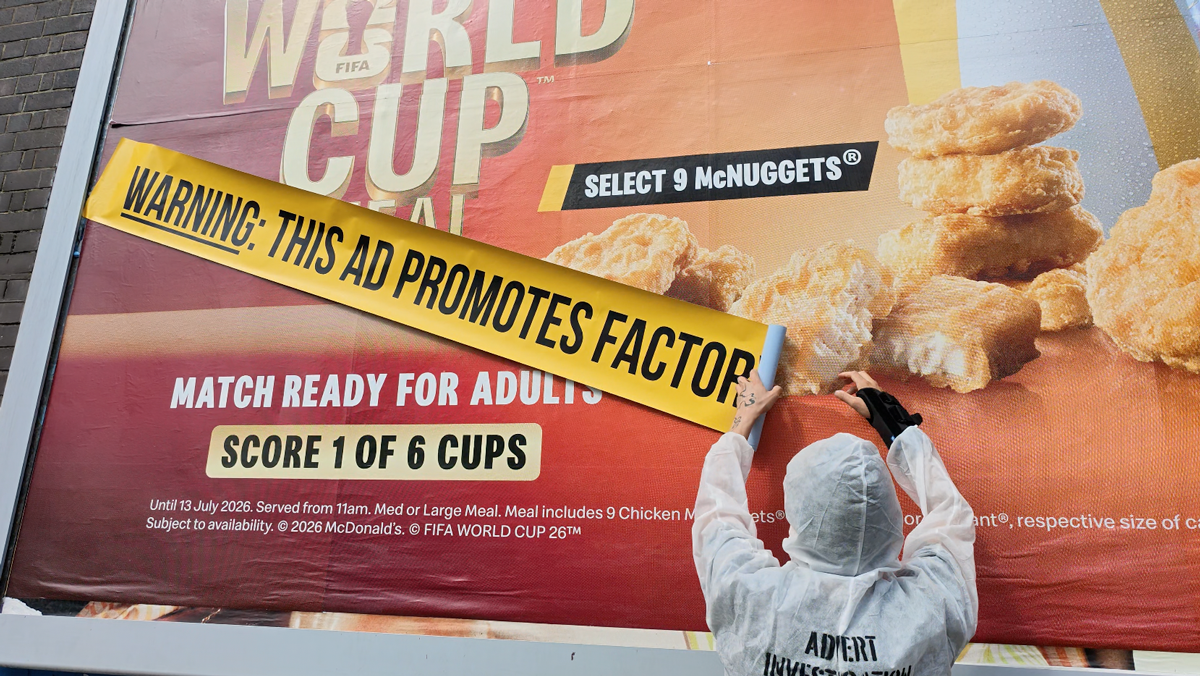
HAIT at work on a McDonalds billboard
As the Hazardous Advert Investigation Team (HAIT), we are tasked with protecting our streets from adverts that promote food and drink that comes from factory farmed animals. Reporting to the GagBigAg headquarters, we move swiftly to spot rogue ads and quarantine them. Our forensic experts analyse evidence of factory farming in supply chains and expose big brand tactics that hide the realities of the food their ads are promoting.
Why did we start our investigations? It all started with McDonald’s. We grew up with maccies, but it got more and more expensive, and factory farming started making headlines. So, we started asking questions. Especially – why don’t McD’s ads show the full story?
It turned out there was a lot to chew over. Think you see a lot of McDonald’s ads? McDonald’s is one of the biggest spenders on outdoor advertising in the UK, spending £86m in 2024 alone to persuade us to eat food even their CEO seems reluctant to taste. There are such high levels of antibiotics in their intensively farmed cows that public health experts call it “reckless”. The supplier of chicken meat to McDonald’s, Avara Foods, has been called out for polluting rivers with toxic waste, harming wildlife and the local economy, excessive water use in areas where supplies are diminishing and horrific animal abuse.
You don’t see any of that in their advertising. And McDonald’s ads are everywhere, alongside other big brands with factory farming running through their supply chains. Take KFC - 95% of UK chickens are from factory farms, giant sheds with 40,000+ birds on top of each other and no access to sunlight - but all you see in KFC ads is weird slogans like “Believe in Chicken”. What does it mean? Why aren’t we told the facts?
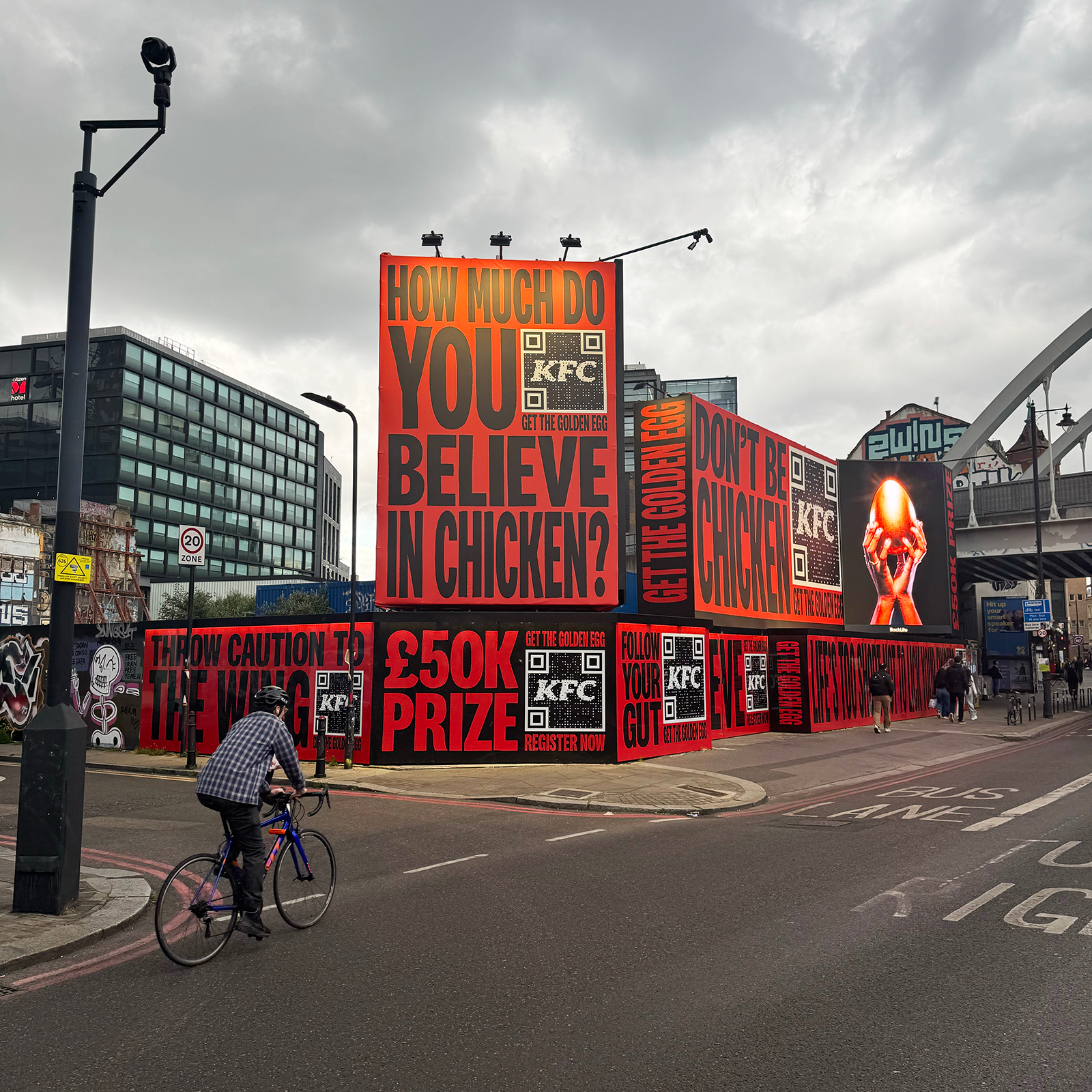
This huge KFC billboard dominates this corner of Shoreditch in central London
Most people in the UK disagree with factory farming: 56% of people in the UK support an outright ban, while at least 73% oppose chickens, pigs, and dairy cows being reared in factory farms. This sentiment holds across political parties. And yet people dramatically underestimate the amount of factory farming going on in the UK. None of us (want to) think that pigs are gassed to death, calves are separated from their mothers at birth or that almost all (95%) of chicken we eat is factory farmed.
Adverts keep that delusion alive and influence all of us, registering in our brain in a fraction of a second, often subconsciously. It surrounds us in the physical and online world, forming one of the dominant cultural influences in our society.
Usually advertising tells us one of two stories about food from animal origin. The first and most common is that animals simply don’t exist. It’s very rare to see an animal in an advert, helping us to dissociate from the origins of the food. If you don’t see a dairy cow in an ad for ice cream, why would you think about how the cow was treated?
The second story is that farmed animals are healthy and happy. Whether it’s cows in green fields in M&S ads, or chickens hopping in the sun in a Happy Egg ad. In any adverts that do show animals, they’re loving life.
What’s the result of all this? If most people don’t support factory farming, then adverts should show the reality of how animals are kept. If ads are keeping us all in the dark, and more and more ads promote meat and dairy across every medium we’re exposed to, the overall outcome is that we eat and drink more meat and dairy.
If we all eat more meat and dairy, our farming system is pushed into industrial scale units, with chickens, cows and pigs packed into sheds and producing amounts of waste our ecosystems can’t cope with. Farmers’ livelihoods are undermined and the environmental damage of unsustainable meat and dairy consumption threatens UK farming and food security. Even the Tories agree.
This is where we come in. By decommissioning factory farm advertising we make space for a fairer food system. One day, in the not so distant future, we envisage the streets of the UK free from meat and dairy advertising. Goodbye to wall-to-wall ads from companies that put profit over ethics and sabotage a fair future for all of us.
We can become more connected with what we eat, making informed decisions about our diets without the constant pressure of big brand billboards ads. With every pound spent at a local business instead of chain stores we strengthen our local economy and give independent businesses a fair chance.
One campaigner says:
“I knew that fast food advertising was likely promoting factory farmed produce but once I started doing some research, the scale of factory farming in the UK became apparent. Without transparency, your favourite brands or supermarkets can't be trusted. We’ve been lied to and it's not ok.”